MONTESSORI PROJECT – BHUTAN
|
|
 |
 |
| Here is a video from VIDEO 2010 | Here is a video taken 3 years later, VIDEO 2013 |
| THE MONTESSORI TEACHER: the best materials and environment would be of no value without a fully-trained teacher in the classroom. The Montessori teachers and volunteers at this school in Bhutan are all certified by AMI (The Association Montessori Internationale). Some pictures and information from this Montessori project can be found in these new Montessori books |
|
 |
|
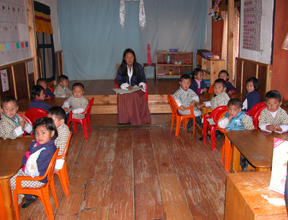
This is the classroom "before." Children stayed seated on plastic chairs at large tables and learned from posters on the wall, from workbooks, and from listening to the teacher. This is still the method of education in many places throughout the world.
|
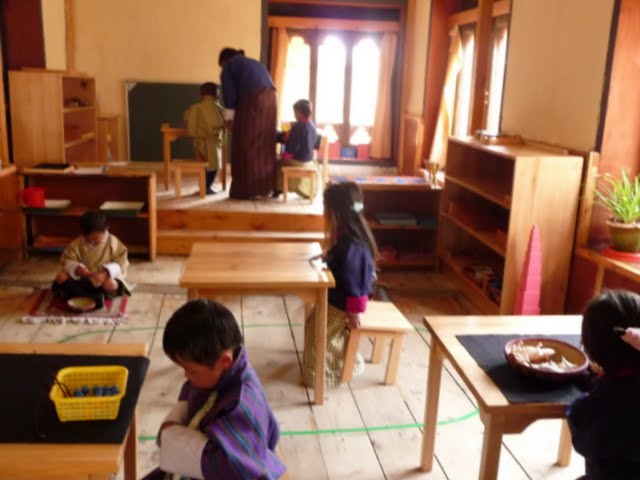
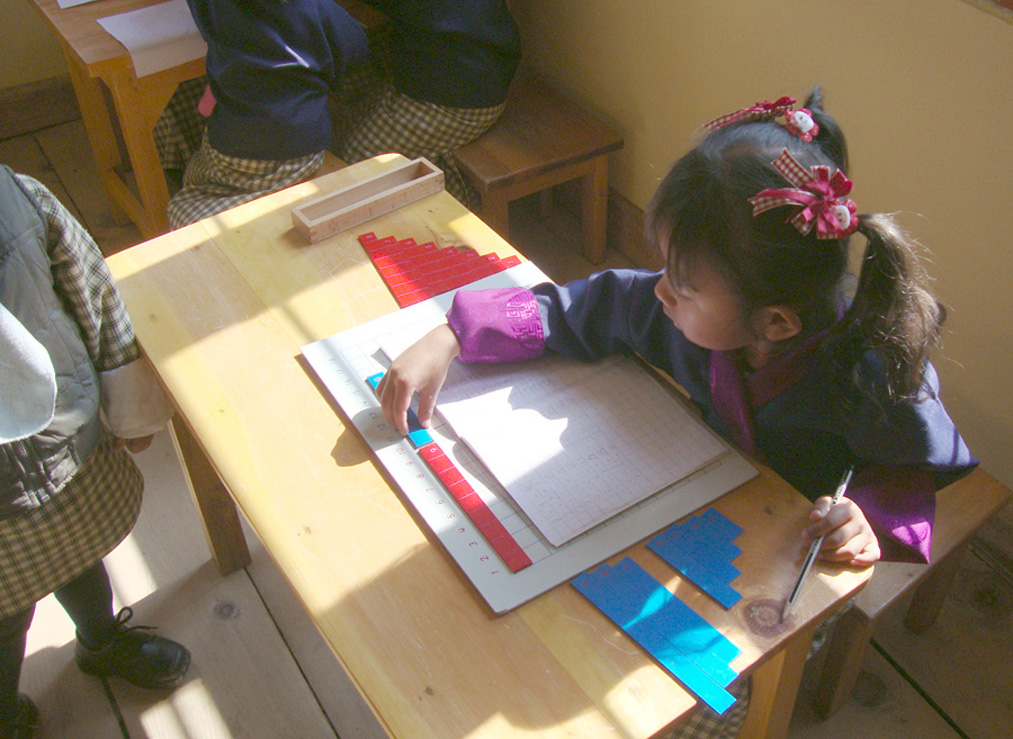
This is the classroom "after." Children are invited to choose a work, given a lesson, and can work for as long as they choose without interruption. Materials were donated by Michael Olaf Montessori and several schools in the USA |
 |
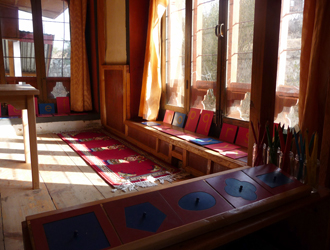 |
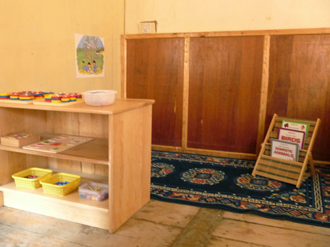
| The book corner is a very important part of the classroom and children are free to use it at any time. In the beginning of the class only board books were presented because the children had a long way to go to learn how to handle books and materials carefully. | The language area: the only five complete metal insets available can be seen in the foreground, and the sandpapers letters, are kept always available for work on the beautiful Tibetan carpet. |
| We were in Bhutan for 2 weeks. Although our hosts, Dendy and Chencho and their children Omo and Kinley, and other relatives, took us to see the beauty and precious culture and religion of Bhutan at every opportunity, we spent most of the time preparing for the first "real" Montessori class in that country. "Real" means basically that the teacher in the classroom teaching the children is the one with the diploma, there are Montessori materials, the the other principles of Montessori theory and practice are followed. | The room is a tiny 10 feet by 19 feet, and some of that is of course taken up by shelves. The entrance area is 6 feet by 6 feet. 15 children from just 3 to almost 4 years of age, are in this beginning class. The children first gathered in the entrance with Dendy or her assistant to sing, and one at a time were invited into the classroom, to choose either a floor mat or table mat and shown how to unfold or unroll it, then invited to choose from the shelf of link-with-the-home toys. Soon they were ready for practical life and language work, and there is much to come. |
 |
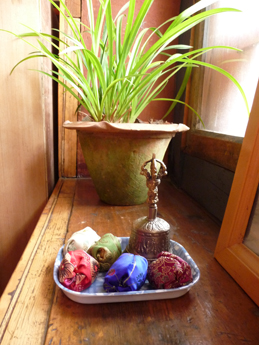 |
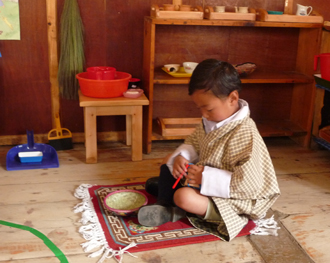
| The floor mats, which define a child's working space in a Montessori classroom were woven by Tibetans. This child is working on a sewing toy in the practical life corner of the classroom. The line, for learning to walk carefully, is made of green tape. The child's broom hanging on the wall we had made just like an adult broom, only child size. | The plant is for learning to care for plants and to dust the leaves. The tray holds a traditional Buddhist ceremonial bell a child will carry while walking on the line, trying to walk so carefully that it will not sound. The Japanese juggling balls are carried on the head in the same exercise. Thus they learn to walk, instead of run, by "Teaching NOT Correcting." |
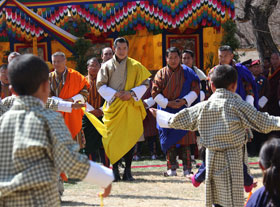 |
While we were there, the 30th birthday of the Kind of Bhutan was celebrated throughout the country. Many groups of children practicing dances in preparation. The king came to the town of Paro to celebrate at the palace of the Queen Mother and so the children at our school were able to dance for him. The king came down from his throne and stood in front of the children smiling at them encouragingly. And so, to be expected, this was their best performance of all, one they will never forget. Here is some information about the king: King of Bhutan A youtube video of just one of the many birthday celebrations: king |
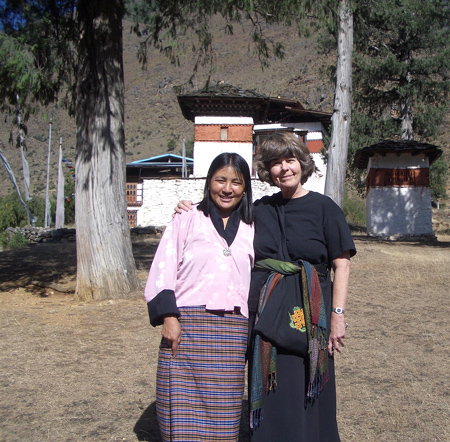
Susan: www.susanart.net Picture: Dendy and Susan in 2016, in the first planning stages of AMI Montessori in Bhutan Susan: www.susanart.net Return to the main Bhutan Home Page |
 |